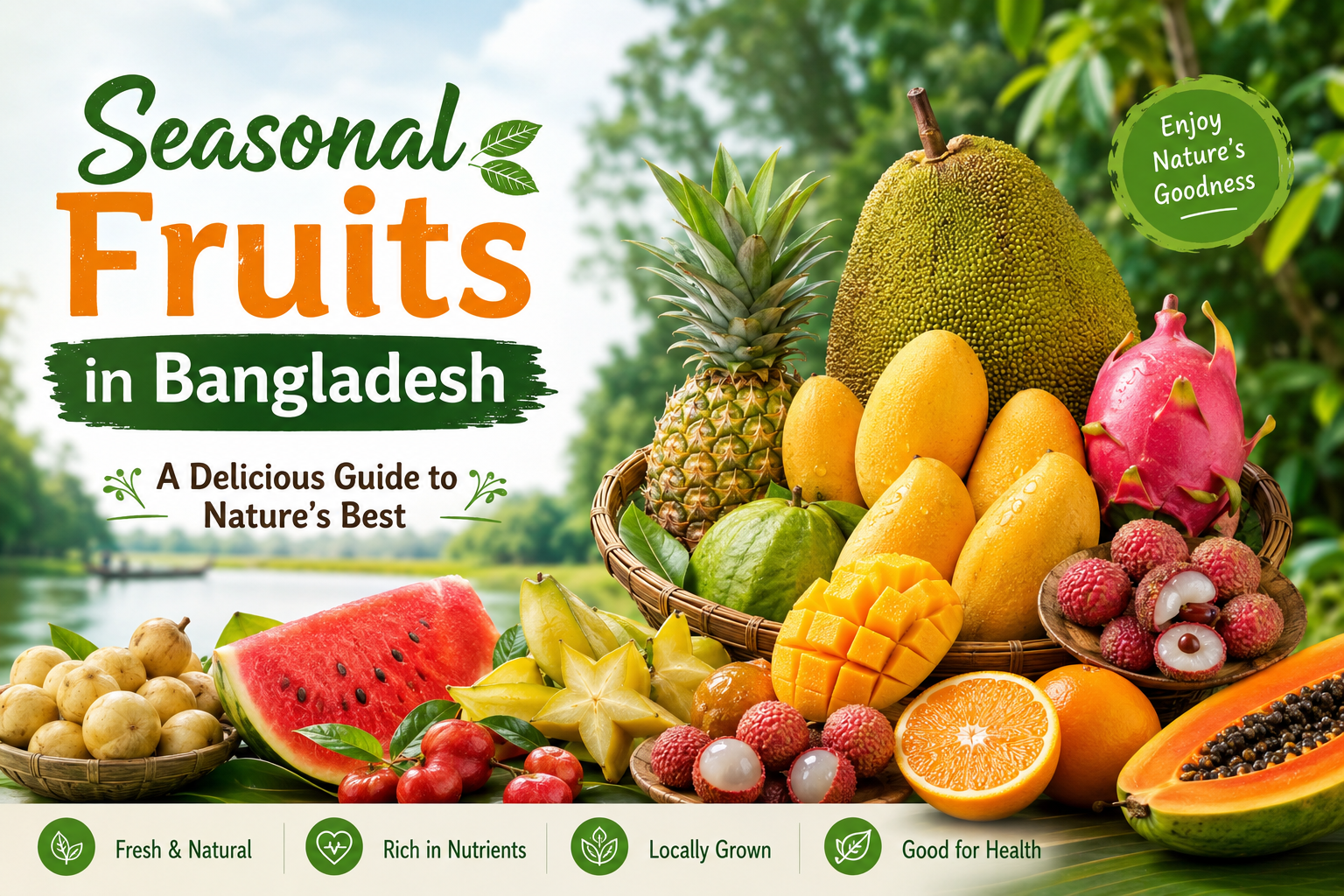
Bangladesh is a land blessed with fertile soil, abundant sunshine, rivers, and a diverse climate. These natural advantages make the country ideal for growing a wide variety of delicious and nutritious fruits. From juicy mangoes in summer to refreshing oranges and sweet dates in winter, seasonal fruits in Bangladesh offer something special throughout the year.
Eating seasonal fruits is not only a delicious way to enjoy nature’s bounty but also an excellent way to add essential vitamins, minerals, fiber, antioxidants, and water to your daily diet. Because many fruits are harvested at their natural growing time, they are often fresh, flavorful, and widely available in local markets.
In this guide, we will explore the most popular seasonal fruits in Bangladesh, their health benefits, and why adding locally grown fruits to your diet can be a smart choice.
Why Are Seasonal Fruits Important?
Seasonal fruits grow and become available during specific times of the year according to Bangladesh’s natural climate and agricultural conditions. Different seasons bring different temperatures, rainfall patterns, and growing conditions, allowing farmers to cultivate a diverse selection of fruits.
One of the biggest advantages of eating seasonal fruits is freshness. Fruits that are naturally harvested during their growing season are often more flavorful and enjoyable. They can also provide a variety of nutrients that support overall health.
Seasonal fruits are also an important part of Bangladesh’s agricultural heritage. Local farmers produce a wide range of fruits that are enjoyed by families across the country. Visiting a local market during fruit season can be a colorful and exciting experience, with stalls filled with mangoes, jackfruit, lychees, pineapples, guavas, watermelons, papayas, and many other varieties.
Summer Fruits in Bangladesh
Summer is one of the most exciting seasons for fruit lovers in Bangladesh. The warm weather creates ideal conditions for many popular tropical fruits. During this season, markets become filled with colorful, sweet, and juicy fruits.
Mango
Mango is often considered one of the most beloved fruits in Bangladesh. The country is famous for producing many varieties of mango, particularly in regions such as Rajshahi, Chapai Nawabganj, and other areas of northern Bangladesh.
Mangoes are naturally sweet and contain vitamins, minerals, and antioxidants. They can be enjoyed fresh, sliced, blended into juice, or used to prepare desserts and traditional dishes.
The arrival of mango season is eagerly anticipated every year. Varieties differ in taste, texture, sweetness, and aroma, giving consumers plenty of choices.
Jackfruit
Jackfruit is another iconic fruit of Bangladesh and is recognized as the national fruit of the country. It is particularly popular during the summer months.
The large fruit contains sweet, aromatic pieces that can be eaten fresh. Jackfruit is also versatile because its seeds can be cooked and eaten. The ripe fruit provides carbohydrates, fiber, vitamins, and minerals.
Because of its distinctive flavor and impressive size, jackfruit holds a special place in Bangladeshi food culture.
Lychee
Lychee is a small, round fruit with a rough outer skin and juicy, fragrant flesh. It is one of the most popular early-summer fruits in Bangladesh.
The fruit has a naturally sweet taste and contains vitamin C and other nutrients. Lychees are particularly enjoyable when served chilled on hot summer days.
Watermelon
Watermelon is another refreshing summer favorite. Its high water content makes it an excellent choice for staying hydrated during hot weather.
It contains vitamins, minerals, and antioxidants while being relatively low in calories. Watermelon can be eaten on its own or added to fruit salads and refreshing drinks.
Pineapple
Pineapple is widely cultivated in Bangladesh and is especially associated with regions such as Madhupur. It has a sweet and slightly tangy flavor that makes it popular during warm weather.
Pineapple provides vitamin C, manganese, and other nutrients. Its refreshing taste makes it suitable for fresh snacks, juices, smoothies, and fruit salads.
Monsoon Fruits in Bangladesh
The rainy season brings its own collection of delicious fruits. Bangladesh receives substantial rainfall during the monsoon, creating favorable conditions for several varieties of fruit.
Guava
Guava is a popular fruit that can be found in many parts of Bangladesh. It can be eaten raw, sliced with a little salt, or used to make juice and other preparations.
Guava is particularly valued for its vitamin C and fiber content. The fruit also contains antioxidants that contribute to a balanced diet.
Papaya
Papaya is available in Bangladesh for much of the year, but it is especially popular during warm and rainy periods. Its soft texture and mildly sweet flavor make it easy to enjoy.
Papaya contains vitamin C, vitamin A-related carotenoids, and fiber. Ripe papaya can be eaten fresh, while unripe papaya is commonly used in cooking.
Star Fruit
Star fruit, also known as kamranga, is another familiar fruit in Bangladesh. When sliced, it has a distinctive star shape.
Its crisp texture and mildly sour flavor make it popular as a snack, particularly when combined with salt and spices. It also provides vitamin C and other nutrients.
Autumn Fruits in Bangladesh
As the rainy season gradually ends, Bangladesh continues to offer a variety of nutritious fruits. Some fruits remain available beyond their main season, while others become more prominent during this transitional period.
Amra
Amra, commonly known as hog plum, is a popular sour fruit in Bangladesh. It is often eaten with salt, chili, and other spices.
Although its flavor can be quite tangy, it is a favorite among people who enjoy traditional Bangladeshi fruit snacks. Amra also provides vitamin C and other nutrients.
Coconut
Coconut is widely available in Bangladesh and can be enjoyed in different forms. Young coconut water is particularly refreshing, while the soft flesh inside provides nutrients and healthy fats.
Coconut water is often consumed as a refreshing natural beverage, especially during hot weather.
Winter Fruits in Bangladesh
Winter brings cooler weather and a different selection of fruits. Citrus fruits become particularly popular during this period, offering refreshing flavors and valuable nutrients.
Orange
Oranges are among the most popular winter fruits. They have a refreshing sweet-and-tangy flavor and are well known for their vitamin C content.
Oranges can be eaten fresh or used to make juice. Including citrus fruits in a balanced diet can help increase vitamin and antioxidant intake.
Malta
Malta is another popular citrus fruit enjoyed in Bangladesh. It has a juicy texture and a pleasant sweet-and-sour flavor.
Like other citrus fruits, malta provides vitamin C and can be a refreshing addition to winter meals and snacks.
Dates
Dates are particularly popular during winter. They are naturally sweet and can be eaten as a snack or used in traditional foods and desserts.
Dates provide carbohydrates, fiber, and several minerals. Because they are naturally sweet and energy-dense, they are best enjoyed as part of a balanced diet.
Health Benefits of Seasonal Fruits
One of the biggest reasons to include seasonal fruits in Bangladesh in your diet is their nutritional value. Different fruits provide different combinations of nutrients, so eating a variety can help create a more balanced diet.
1. Rich in Vitamins and Minerals
Many fruits provide essential vitamins such as vitamin C, vitamin A, and several B vitamins. They can also contribute minerals such as potassium and magnesium to the diet.
2. Good Source of Dietary Fiber
Fruits such as guava, papaya, jackfruit, and apples contain dietary fiber. Fiber can support normal digestion and help maintain a healthy diet.
3. Provides Antioxidants
Many colorful fruits contain naturally occurring antioxidant compounds. These compounds help protect cells from oxidative stress and are an important part of a nutritious eating pattern.
4. Helps With Hydration
Fruits such as watermelon, pineapple, oranges, and other juicy varieties contain significant amounts of water. They can therefore contribute to daily fluid intake, especially during Bangladesh’s hot seasons.
5. Supports a Healthy Diet
Whole fruits are generally nutrient-dense foods that can be included in a balanced eating pattern. Choosing fruit instead of highly processed snacks can be a simple way to improve the overall quality of your diet.
How to Choose Fresh Seasonal Fruits
Choosing good-quality fruit can make your eating experience even better. When buying seasonal fruits in Bangladesh, consider their appearance, smell, texture, and freshness.
Choose fruits that look naturally ripe and free from significant bruises, mold, or damaged areas. Some fruits should feel slightly soft when ripe, while others should remain firm.
It is also a good idea to buy fruits from reliable sellers and wash them properly before eating. Washing fruits under clean running water can help remove dirt and surface contaminants.
Remember that not every fruit needs to look perfect to be nutritious. Slightly imperfect fruit can still be delicious and valuable as part of a healthy diet.
Why Choose Local Seasonal Fruits?
Bangladesh has an impressive variety of locally grown fruits. Choosing local seasonal produce can help consumers enjoy fruits when they are naturally abundant.
Seasonal availability can also make certain fruits more affordable because supply is higher during their main harvest period. Buying local produce can additionally support farmers and agricultural communities.
Most importantly, eating a variety of fruits throughout the year allows you to experience the changing flavors of Bangladesh’s seasons.
A Simple Seasonal Fruit Guide
Here is a quick overview of some popular seasonal fruits in Bangladesh:
| Season | Popular Fruits |
|---|---|
| Summer | Mango, Jackfruit, Lychee, Watermelon, Pineapple |
| Monsoon | Guava, Papaya, Star Fruit, Coconut |
| Autumn | Amra, Coconut, Papaya |
| Winter | Orange, Malta, Dates, Guava |
Fruit availability can vary by region, weather, and cultivation practices, so the exact season may differ from one area to another.
Frequently Asked Questions
What are the most popular seasonal fruits in Bangladesh?
Some of the most popular seasonal fruits include mango, jackfruit, lychee, pineapple, watermelon, guava, papaya, oranges, malta, and dates.
Which fruits are popular in summer in Bangladesh?
Mango, jackfruit, lychee, watermelon, and pineapple are among the most popular summer fruits in Bangladesh.
Which fruits are available in winter?
Winter commonly brings popular citrus fruits such as oranges and malta, along with dates and other fruits depending on the region and harvest.
Are seasonal fruits healthy?
Yes. Whole fruits can provide vitamins, minerals, fiber, water, and naturally occurring antioxidants. Eating a variety of fruits is generally a useful part of a balanced diet.
How should I eat seasonal fruits?
Most fruits can be eaten fresh after washing them properly. They can also be added to fruit salads, smoothies, juices, or traditional recipes. Whole fruit is often preferable to juice because it retains more of the fruit’s natural fiber.
Conclusion
Seasonal fruits in Bangladesh are more than just delicious foods. They are an important part of the country’s agriculture, culture, and everyday diet. Each season brings a unique collection of fruits, from the famous mangoes and jackfruits of summer to refreshing citrus fruits during winter.
By enjoying a variety of locally available fruits throughout the year, you can experience the natural flavors of Bangladesh while adding important nutrients to your diet. Whether you prefer the sweetness of mango, the refreshing taste of watermelon, the tanginess of amra, or the juicy flavor of oranges, there is always something delicious to discover.
The next time you visit a local market, take a moment to explore the fruits that are naturally in season. You may discover a new favorite while enjoying one of the simplest and tastiest gifts that Bangladesh’s fertile land has to offer.